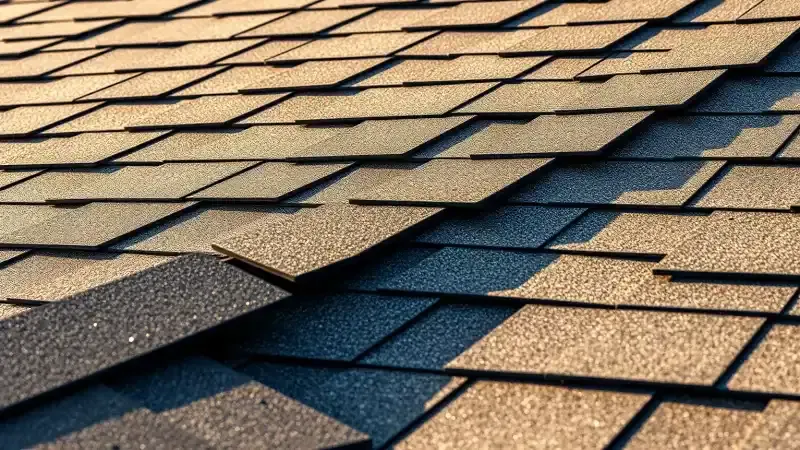
Roofing in Parsippany, NJ
Parsippany's roofscape tells a story in three eras.
Split-levels from the 1960s and 1970s dominate Lake Parsippany and Troy Hills, often with low-slope sections where the pitch shifts mid-house.
Call (973) 786-9795Roofing in Parsippany
For a home in Lake Parsippany or Troy Hills, compare repair proposals against the actual roof pitch, existing layers, and flashing condition rather than the neighborhood name.
For Parsippany condos and townhomes, ask who authorises shared-roof work and how the provider will contain debris and limit tenant disruption.
Colonial and ranch homes from the 1950s through 1980s line Knoll Ridge and Intervale. Newer contemporary builds since 2000 appear in Mountainside and near Parsippany Center.
Each era fails differently. The local weather works hard on every one of them. Heavy wet snow loads press on rafters and sheathing through winter.
Nor'easters drive wind and rain sideways, probing every flashing detail. Summer humidity feeds algae and moss across north-facing shingles.
That combination produces predictable failures on Parsippany rooftops:
- Ice dams forming at eaves and in valleys after snowpack refreezes
- Asphalt shingle granule loss and curling on south-facing slopes
- Algae streaking and moss at the roofline on shaded planes
- Wind-lifted ridge caps and torn shingle tabs after Nor'easters
- Rotted fascia and soffit where water backs up behind gutters
Older split-levels deserve special attention. Their stepped rooflines create multiple valleys and wall transitions where step flashing and counter-flashing must be perfect.
A small gap at a dormer cheek or chimney flashing lets water track down into ceiling joists before anyone notices a stain.
Homes near Lake Parsippany face added humidity off the water, which speeds moss growth on shaded planes. Slope matters too.
Some Parsippany homes carry a mansard or gambrel element, and low-slope sections need membrane or built-up roof assemblies rather than standard shingles.
A roofer should identify each substrate and slope before quoting. Elevation helps a little, but not much.
Parsippany sits between 280 and 480 feet above sea level, high enough for real snow totals but with full freeze-thaw cycling.
That cycling is what cracks sealant, loosens fasteners, and opens seams in metal panel runs. What should a homeowner watch?
Curling or missing shingles after a storm. Granules in the gutter. Ice damming at the eave line. Daylight in the attic.
Water stains on ceilings after rain. Any of these justifies a roof inspection before the next season turns.
What Roofing Work in Parsippany Includes
A proper roof project begins with a roof inspection, not a sales pitch. The roofer walks the rooftop, checks the deck, and documents conditions.
Expect probing of sheathing with a pry bar and a look inside the attic at rafters, joists, and insulation.
Material selection follows the structure. Steep-slope planes commonly take architectural shingle or three-tab shingle, with synthetic underlayment and ice-and-water shield at eaves and valleys.
Low-slope areas call for membrane, tpo, epdm, pvc membrane, or a built-up roof in modified bitumen.
Cedar shake, slate, and clay tile or concrete tile appear on some older and higher-end homes. Metal panel and standing-seam panel suit certain modern designs.
Tear-off is physical work. Crews strip shingles and roofing felt down to the substrate, then inspect roof deck panels for soft spots.
Damaged plywood or osb gets replaced and renailed. A dumpster holds debris; a magnet sweep catches stray nails.
Installation sequence matters as much as materials:
- Ice-and-water shield at eaves, valleys, and penetrations
- Synthetic underlayment across field areas
- Drip edge at eaves and rakes, set over the underlayment
- Step flashing and counter-flashing at walls and chimneys
- Ridge vent and soffit vent pairing for balanced ventilation
Penetrations get their own treatment. Pipe flashing and boot flashing seal plumbing stacks. Skylights and dormer walls need apron flashing and new sealant.
Chimney flashing is rebuilt in layers, never smeared with roof cement alone.
Tools tell you the trade's real vocabulary. Roofing square, nail gun, air compressor, pry bar, and roofing shovel are standard.
Torch work appears on modified bitumen systems. Scaffold and ladder setup protect crews and the roofline.
A final walk checks gutters, downspouts, and cleanup before the dumpster leaves.
Quality & Materials Standards
Parsippany roofing falls under New Jersey's statewide building code, adopted locally. That means ice-and-water shield at eaves, proper underlayment, and ventilation sized to the attic.
A roofer should be able to explain how the assembly meets code, not just what it costs.
Material standards separate lasting roofs from short-lived ones. Architectural shingle with a solid warranty beats a cheap three-tab shingle every time.
On low slopes, membrane products such as tpo or epdm outperform shingles laid flat. Where historical character matters, cedar shake and slate demand specialized installers.
Structural details deserve scrutiny. Trusses and rafters carry snow load, and any sagging suggests deeper problems.
A ridge beam, purlin, batten, or counterbatten may appear in specific assemblies.
The verge and rake edges need secure fastening, and every screw, nail, and anchor should meet the manufacturer's pattern.
Water management is the core of quality:
- Ice dam protection at eaves and valleys
- Correct flashing at chimneys, walls, and pipe boots
- Vapor barrier and insulation balance in the attic
- Functional scupper and coping on flat or parapet sections
- Snow guard placement on steep slopes above walkways
Ventilation deserves its own check. A ridge vent paired with soffit vent intake keeps the deck dry.
An attic fan can help, but only when intake air is adequate. Poor ventilation shortens shingle life and feeds ice dams.
Ask about waterproofing and weatherproofing details in writing. Confirm that sealant, adhesive, coating, and roof cement are manufacturer-approved for the assembly.
Watch for mastic smeared over failed flashing — it hides problems rather than fixing them.
Small features matter too. Canopy, awning, and overhang areas collect debris and need inspection. A mansard or gambrel slope changes the whole approach.
Any roof estimate should list materials by name, note the underlayment and flashing plan, and state what the building code requires.
Finally, verify insurance and licensing before signing.
Ask for a written scope, a materials list, and a clear statement of what happens if hidden damage appears during tear-off.
Honest roofing contractors put that in writing.
Seasonal and Storm Exposure in Parsippany
Parsippany sits between 280 and 480 feet above sea level, and that modest elevation shift matters more than it sounds.
Higher ridges catch wind-driven precipitation first, while low ground near Lake Parsippany holds moisture longer after a storm passes.
Winter brings heavy wet snow loads rather than powder.
That weight stresses every rafter and roof deck, and freeze-thaw cycles work at flashing and sealant until tiny gaps open.
Ice dam formation along the eave is the classic failure here.
Nor'easters deliver the second punch. Intense wind and rain drive water sideways into step flashing, chimney flashing, and any worn pipe boot.
Lifted shingle tabs and torn ridge cap are common finds after a single strong system.
Summer humidity is the slow threat. Algae streaks and moss take hold on north-facing asphalt shingle planes, especially on roofs with weak attic ventilation.
Clogged soffit vent screens make it worse.
Timing follows directly from that pattern. Book a roof inspection in late fall, before the first snow load.
A spring check after the thaw catches ice dam damage and freeze-cracked sealant while it is still minor.
Watch for these warning signs between inspections:
- Granules collecting in gutter runs after rain
- Curling or missing three-tab shingle tabs on south slopes
- Dark algae streaking that spreads each season
- Lifted drip edge or soft fascia along the eave
- Daylight visible through roof deck boards in the attic
Common Roofing Issues in Parsippany
For your Parsippany roof, heavy wet snow and wind-driven rain can expose weak flashing and let water seep beneath shingles. Summer humidity encourages algae and moss growth; ask your provider to distinguish surface growth from granule loss, deteriorated decking, and end-of-life wear.Roofing Services in Parsippany
Roof Inspection
For your Parsippany property, request photographs and written findings that distinguish damaged shingles, flashing defects, and decking concerns.
Roof Repair
Ask the provider to identify the water-entry point and specify which shingles, flashing components, or pipe boots need replacement.
Roof Replacement
Compare tear-off and overlay proposals carefully, including how each provider will assess decking condition and address concealed damage.
Emergency Roof Repair
For an active leak in Parsippany, ask about temporary protection, access restrictions, and follow-up repairs; availability and response times vary by provider.
Gutter Repair
Ask the provider to assess leaking joints, loose attachments, and downspout discharge before recommending repair or gutter installation.
Commercial Roofing
For Parsippany commercial or multi-family properties, request a written plan covering occupied areas, debris containment, reasonable working hours, and emergency leak priority.
What Roofing Work Around Parsippany Involves
Parsippany Roofing — Frequently Asked Questions
What should you check after a winter storm in Parsippany?
After heavy wet snow or wind-driven rain in Parsippany, check from the ground for displaced shingles and overflowing gutters.
Photograph indoor stains if safe, and ask the provider to inspect flashing and decking before deciding whether targeted repair is sufficient.
How should you compare roofing materials for a Parsippany home?
For your Parsippany home, compare asphalt shingles, metal roofing, slate, or cedar shake against roof pitch and structural capacity.
Ask each provider to specify underlayment, flashing details, ventilation, and maintenance needs so estimates describe comparable systems rather than material names alone.
Who should confirm roofing permits and codes in Parsippany?
Before authorising work in Parsippany, ask your provider to confirm applicable New Jersey building code requirements with the local building department.
Your written scope should identify permit responsibility, required inspections, and whether proposed decking or structural changes affect the approval process.